- By: Bart Baggett
- will and testament
- 08/14/2022
- Comments (0)

This short article tells you how to deal with the probate court and the possible forgery of your parents’ will. The death of your parents is a difficult time.
You’re probably here because you’ve just lost one of your parents, and now you’re tasked with handling the last will and testament.
If the signature on the Last Will and Testament or those Trust documents doesn’t look authentic, this article is for you.
My name is Bart Baggett and I founded Handwriting Experts Inc over 25 years ago to help people just like you. We specialize in probate cases, involving signatures, trusts, deeds, and wills.

Oftentimes, it is in the case where someone has passed away and the entire estate rest in the hands of the probate court judge. If a judge decides that this is what your parents wanted, your parent’s house, cards, jewelry, and the entire estate can be handed to the idiot step-child.
It’s our burden to figure out our parents’ estate and handle all the details. And unfortunately, it’s really, really common for brothers, sisters, uncles, and even caregivers to forge wills and try to take everything— and I mean everything!
So, you’re not alone in this situation. And I know it’s confusing. If you’re not an attorney, then this will be very helpful for you. I’ll walk you through how we work with probate cases and how a court-qualified handwriting expert can help you during the process.
At Handwriting Experts Inc., we are forensic document examiners. We require authenticated handwriting samples and signatures of the decedent (your mom or your dad who has passed away… and we determine if indeed the will for this person has been forged.
Here are the steps we follow to determine if a Last Will and Testament has been forged.
- Is there a document with the original, or “wet”, signature?
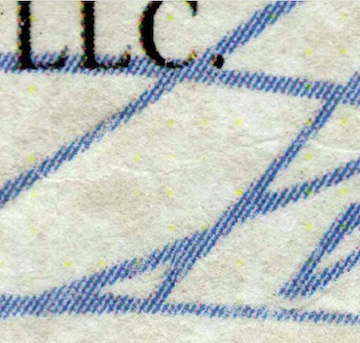
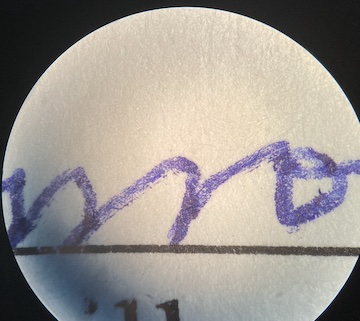
Often times in a probate case, there’s an actual wet signature (pen and ink original) sitting at the courthouse under lock and key. But that’s not always true. If it’s possible to get access to that will, one of our experts will personally go to the courthouse with a microscope and a camera to inspect it professionally. At the courthouse, a forensic document examiner will take photographs of the document in question and confirm whether or not a human being’s handwriting wrote and signed the will. Sometimes color photocopies can look like wet ink, but it is not the same under a microscope. See the graphic below. One photograph is a color printout, the other is a blue ballpoint pen written by a human hand.
- Compare the signature on the will with other samples of the decedent’s signature.
Next, we’ll compare those signatures to other samples of your parent’s handwriting—their passport, visa, checkbook, birth certificates, wedding certificates, etc. We’ll look for their known handwriting. Your that’s your job is to find their known handwriting. And then, we will compare it.
- Determine if the signature on the will is authentic or if it has been forged.
We’re handwriting experts. I’ve been doing this for 30 years; I’ll know for sure whether that signature is forged. Even if the parent was really sick, or had Alzheimer’s or Parkinson’s, we can take all that into consideration. And it’s impossible to slip a forgery past trained eyes.
So, once I or my team does that job, we decide if a forgery happened. If it did, we’ll write a declaration. And if you need, we’ll come to court and testify on your behalf.
If this is a service that you need, the pricing is on our website.
Whether you deal with me, any of our experts, or any expert in the country, the process is pretty much the same. In order to prove a forgery in court, you’re going to have to hire a forensic handwriting expert, and they’re going to have to be court qualified. They’re going to have to testify. Otherwise, it’s just your word against his or her.
And that’s the process of how you handle the determination of a forgery of a will and testament in court.
If you need our help, please reach out. Our main website is handwritingexperts.com. You can hire any of our professional experts on the website. If you want to hire me directly, go to handwritingexpertusa.com.
We have offices around the country, and we’ll travel to you to help you through this difficult time. While we know the circumstances for needing our services are not the best, at least you can rest knowing the wishes of your loved one have been fulfilled.


